Gelatide Official Website › Gelatide Ingredients
Gelatide Ingredients: The Six Plant Extracts in Each Bottle
Gelatide is made with six botanical extracts.
They are green tea leaf, guarana seed, African mango seed, Coleus forskohlii root, capsicum annuum fruit and raspberry ketones. Green tea and guarana both bring natural caffeine.
Want the full label? See what the bottle prints.
Every extract below is quoted from the seller’s own ingredient artwork. Every evidence sentence links to a study that was confirmed against its PubMed record before it was written down.
The six extracts on the Gelatide label
Three of these have a defensible human record for the specific thing they are here for. Two have small trial records that do not support the way the category describes them. One has essentially no human efficacy evidence at all.
Green Tea Leaf Extract
Camellia sinensis, leaf · amount not publishedThe catechin source, and one of the two things on this label that carries caffeine.
Green tea is the most studied item on this panel and the honest summary is still modest. The Cochrane review pooled fourteen trials of green tea preparations in overweight adults and found a weight difference small enough to be clinically unimportant, with wide variation between studies. A 2024 meta-analysis looking specifically at catechins added to exercise training found a small additional effect on body weight and fat mass.
The catch. The trials that found anything used standardised extracts at stated catechin doses, usually several hundred milligrams a day. This bottle prints no catechin figure and no extract weight, so there is no number here to compare with any of them.
Safety note. Concentrated green tea extract, as opposed to brewed tea, has been linked to rare liver injury, which is why it has its own LiverTox monograph and a United States Pharmacopeia safety review.
Guarana Seed Extract
Paullinia cupana, seed · amount not publishedA caffeine-bearing seed, traditionally used as a stimulant.
Guarana seed runs roughly two to six per cent caffeine by weight, several times the caffeine density of coffee bean, with theobromine and theophylline alongside it. The clearest human evidence is for alertness and cognitive performance rather than for body composition.
The catch. Caffeine is the reason a stimulant botanical shows up on a metabolism label at all: it lifts resting energy expenditure for a few hours. That is a real effect and a small one, and it says nothing about what happens over a month.
Safety note. Because green tea is on the same label, the caffeine arrives from two directions. Neither is quantified on the bottle, so the total is genuinely unknown to a buyer counting their daily intake.
African Mango Seed Extract
Irvingia gabonensis, seed · amount not publishedThe ingredient the category built its reputation on, and the one whose evidence base is thinnest relative to its fame.
A small number of short trials from a single research group reported large effects, the best known being a 2009 randomised double-blind study of a standardised extract called IGOB131. A systematic review that assessed those trials judged the methodological quality poor and declined to call the effect established.
The catch. Later meta-analyses that pooled Irvingia with other herbal weight products found effects too small and too uncertain to recommend. When almost all of the positive data comes from one group and one extract, the correct reading is "not yet shown", not "proven".
Safety note. Reported adverse effects in those trials were mild: headache, dry mouth, disturbed sleep and wind. The extract used in them was a defined preparation at 300 mg a day; this label names neither.
Coleus Forskohlii Root Extract
Plectranthus barbatus, root · amount not publishedThe forskolin source. Forskolin raises cyclic AMP inside cells, which is the mechanism the marketing usually points at.
Two small twelve-week trials from 2005 are still the ones everybody cites. In overweight men, forskolin shifted body composition and testosterone without changing body weight. In mildly overweight women, it did not produce weight loss either, though the authors noted it appeared to slow weight gain.
The catch. Both trials used 250 mg of a ten per cent forskolin extract twice a day, which is 50 mg of forskolin daily. Neither found weight loss. Reading those two studies as support for a weight claim is not what they say.
Safety note. Forskolin can lower blood pressure and affects platelet function. Anyone on blood pressure medication, a blood thinner or heart medicine should ask a clinician before taking anything containing it.
Capsicum Annuum Fruit Extract
Capsicum annuum, fruit · amount not publishedThe pepper extract, for its capsaicinoids.
A meta-analysis of thermogenesis studies found capsaicinoids produced a measurable rise in energy expenditure in healthy adults. A separate pooled analysis of human studies found capsaicin and capsiate increased energy expenditure and reduced abdominal fat by a small margin.
The catch. The size of that rise is on the order of a few dozen calories a day in the studies that measured it. It is a real physiological effect that is far too small to do the work a sales page implies, and it is dose dependent, which is a problem when no dose is printed.
Safety note. The commonest complaint with concentrated capsicum is gastrointestinal: burning, reflux and stomach discomfort, especially on an empty stomach.
Raspberry Ketones
4-(4-hydroxyphenyl)butan-2-one · amount not publishedAn aroma compound from raspberries, made synthetically at supplement scale because extracting it from fruit is prohibitively expensive.
This is the weakest item on the panel and it is worth saying so plainly. The mechanism work is in rodents and cell culture. A 2021 pharmacological review catalogues that literature and notes the absence of human efficacy trials of raspberry ketone on its own.
The catch. A systematic review of supplements built on isolated organic compounds found no reliable weight effect across the class. Where raspberry ketone has appeared in a human study at all, it has been inside a multi-ingredient product alongside diet and exercise, which cannot tell you what the ketone did.
Safety note. No serious safety signal has emerged, which is partly a statement about how little it has been studied in people.
What the research used, and what Gelatide prints
| Extract | Printed here | Dose in the research | Can it be compared? |
|---|---|---|---|
| Green tea leaf | not published | Several hundred mg of catechins daily in the Cochrane review's trials | No |
| Guarana seed | not published | Standardised to caffeine, typically 75 to 300 mg caffeine in the pooled cognitive studies | No |
| African mango seed | not published | 300 mg of the IGOB131 extract daily in the 2009 trial | No |
| Coleus forskohlii root | not published | 50 mg forskolin daily in Godard 2005 | No |
| Capsicum annuum fruit | not published | Stated capsaicinoid doses in the thermogenesis meta-analysis | No |
| Raspberry ketones | not published | No human efficacy dose has ever been established | Nothing to compare |
Six rows and one answer. This table is the reason this page exists and it is the least flattering thing on the website.
Which Gelatide extract has the best evidence, and which has the worst
If you are deciding whether a formula is worth $158, the useful question is not whether the ingredients sound impressive but which of them would survive a sceptical reading. Ranked by the quality of the human record for the outcome the label is pointing at:
- Green tea leaf extract. The largest body of controlled human data on this panel by a wide margin. The Cochrane review pooled fourteen trials and found the weight effect small and not clinically important; a 2024 meta-analysis found a modest additional effect when catechins were added to exercise. Modest and real beats large and imagined.
- Capsicum annuum. Thermogenesis after capsaicinoids is measurable and repeatable in healthy adults, and a pooled analysis of human studies found small effects on energy expenditure and abdominal fat. The mechanism is not in doubt; the magnitude is.
- Guarana seed. Its caffeine content is well characterised and caffeine's acute metabolic effect is not controversial. What guarana does not have is a body of trials showing a body-composition outcome; its human record is mostly about alertness.
- Coleus forskohlii. Two small twelve-week trials from 2005, neither of which produced weight loss. The trial in women reported that forskolin appeared to slow weight gain rather than reverse it.
- African mango seed. Famous, and thin. Almost all the positive data comes from one research group, and the systematic review of it judged the methodological quality poor.
- Raspberry ketones. Rodents and cell culture. A systematic review of isolated compounds sold for weight loss found no reliable effect across the class.
That ranking is not a reason to buy or not buy. It is the information a seller would normally leave you to assemble yourself, and assembling it takes about three hours if you know which databases to search.
What is not in Gelatide, and why absence is hard to prove
Buyers routinely ask whether a metabolism product contains a stimulant they are avoiding, a thyroid ingredient, or something that would show on a test. Here is what can honestly be said, and where it stops.
- ›No synephrine or bitter orange is named on the label
- ›No ephedra, which has been banned in supplements in the United States since 2004
- ›No added stimulant beyond the caffeine naturally present in green tea and guarana
- ›No thyroid hormone or iodine is named
- ›No sugar, no gummy base, because this is a liquid rather than a chewable
Every one of those statements is an inference from a named ingredient list, and that is a weaker thing than a declaration. A label that names six extracts and prints no “other ingredients” line is not telling you what carries the extracts, what preserves them, or what the liquid base is. Glycerin, alcohol and water are the usual answers in this format, and we are not going to assert which of them this bottle uses. The FDA's dietary supplements pages explain what a label is required to carry, which is a useful thing to read next to any bottle.
How this Gelatide ingredient page was written
This desk publishes what the bottle says and marks the gaps. Four working rules, each of them something a sceptical reader can audit inside ten minutes:
- The bottle is the source. The three claim lines, the form, the 2 oz / 60 ml volume and the six extract names come from the printed label and the seller’s own listing artwork, not from a review column.
- The gaps are marked, never filled in. The quantity behind each extract, the serving size and the caffeine total sit with the manufacturer, and a figure nobody has printed is never guessed at here or in the structured data.
- Every citation was opened before it was used. Each study was confirmed against its own PubMed record and each government page was read rather than assumed. A source that would not open from this desk did not go in.
- Corrections change the date. Write to [email protected] and the review date at the foot of the page moves forward.
We earn when you buy. Gelatidedaily is the Gelatide retail desk named at the top of this page, and it makes money on orders placed through it. That is why the label analysis, the four-star reviews and the page on what “boosts fat metabolism” may mean are here: they are where our interest and yours pull apart.
Tracking, address changes, cancellations and refunds are taken on +1 (202) 604-0611 once an order exists. Nothing is sold on that line; the checkout is the only route.

Every page, every journal post, the bottle facts and the ingredients go through review by Dr. Goldwyn Foggie (Dr. Goldie), MD before they ship. These pages are written from the printed Gelatide bottle and the seller’s own listing artwork, with public research cited for each named extract and the gaps marked rather than estimated. Where the seller’s marketing reaches past what the bottle supports, this desk says so on the page it happens on. Corrections are made here and the review date moves with them. Write to [email protected]. Last reviewed September 2026 by Dr. Goldwyn Foggie (Dr. Goldie), MD.
Research cited for the six Gelatide extracts
- Jurgens TM, Whelan AM, Killian L, Doucette S, Kirk S, Foy E. Green tea for weight loss and weight maintenance in overweight or obese adults. Cochrane Database Syst Rev. 2012;12:CD008650. https://pubmed.ncbi.nlm.nih.gov/23235664/
- Gholami F, Antonio J, Evans C, et al. Does green tea catechin enhance the weight-loss effect of exercise training in overweight and obese individuals? A systematic review and meta-analysis of randomized trials. J Int Soc Sports Nutr. 2024;21(1):2411029. https://pubmed.ncbi.nlm.nih.gov/39350601/
- Hack B, Penna EM, Talik T, Chandrashekhar R, Millard-Stafford M. Effect of Guarana (Paullinia cupana) on cognitive performance: a systematic review and meta-analysis. Nutrients. 2023;15(2):434. https://pubmed.ncbi.nlm.nih.gov/36678305/
- Onakpoya I, Davies L, Posadzki P, Ernst E. The efficacy of Irvingia gabonensis supplementation in the management of overweight and obesity: a systematic review of randomized controlled trials. J Diet Suppl. 2013;10(1):29-38. https://pubmed.ncbi.nlm.nih.gov/23419021/
- Ngondi JL, Etoundi BC, Nyangono CB, Mbofung CM, Oben JE. IGOB131, a novel seed extract of the West African plant Irvingia gabonensis, significantly reduces body weight and improves metabolic parameters in overweight humans in a randomized double-blind placebo controlled investigation. Lipids Health Dis. 2009;8:7. https://pubmed.ncbi.nlm.nih.gov/19254366/
- Godard MP, Johnson BA, Richmond SR. Body composition and hormonal adaptations associated with forskolin consumption in overweight and obese men. Obes Res. 2005;13(8):1335-43. https://pubmed.ncbi.nlm.nih.gov/16129715/
- Henderson S, Magu B, Rasmussen C, et al. Effects of Coleus forskohlii supplementation on body composition and hematological profiles in mildly overweight women. J Int Soc Sports Nutr. 2005;2(2):54-62. https://pubmed.ncbi.nlm.nih.gov/18500958/
- Irandoost P, Lotfi Yagin N, Namazi N, et al. The effect of capsaicinoids or capsinoids in red pepper on thermogenesis in healthy adults: a systematic review and meta-analysis. Phytother Res. 2021;35(3):1358-77. https://pubmed.ncbi.nlm.nih.gov/33063385/
- Zsiboras C, Matics R, Hegyi P, et al. Capsaicin and capsiate could be appropriate agents for treatment of obesity: a meta-analysis of human studies. Crit Rev Food Sci Nutr. 2018;58(9):1419-27. https://pubmed.ncbi.nlm.nih.gov/28001433/
- Bessell E, Maunder A, Lauche R, Adams J, Sainsbury A, Fuller NR. Efficacy of dietary supplements containing isolated organic compounds for weight loss: a systematic review and meta-analysis of randomised placebo-controlled trials. Int J Obes (Lond). 2021;45(8):1631-43. https://pubmed.ncbi.nlm.nih.gov/33976376/
- LiverTox: Clinical and Research Information on Drug-Induced Liver Injury. Green Tea. National Institute of Diabetes and Digestive and Kidney Diseases, Bethesda MD. https://www.ncbi.nlm.nih.gov/books/NBK547925/
- U.S. Food and Drug Administration. Dietary Supplements. https://www.fda.gov/food/dietary-supplements
More about Gelatide
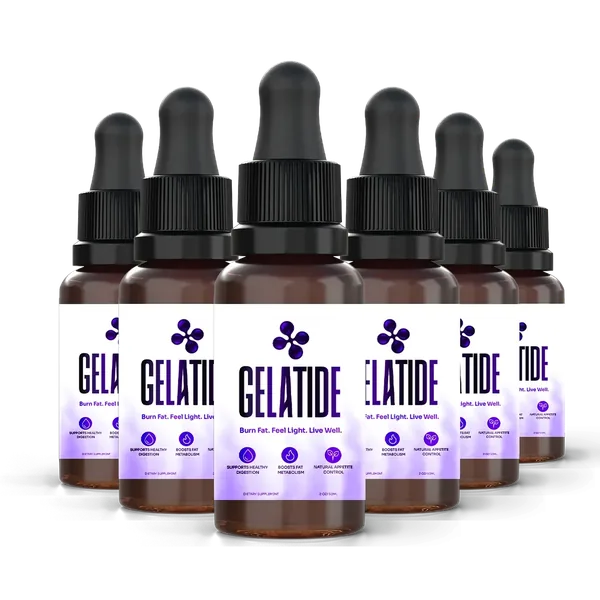
Six Gelatide extracts, no amounts, and sixty days to decide
If the missing numbers are a deal-breaker, this is the page that should have told you so. If they are not, the guarantee is the part of this offer that carries the risk.
$49 to $79 a bottle · 60 days to change your mind
Order Gelatide On The Official WebsiteOne-time payment, no subscription · 60-day money-back guarantee · lot GEL-26/GE-5255 · tracking and refunds on +1 (202) 604-0611