Gelatide Official Website › Blog › What “boosts fat metabolism” means
What “Boosts Fat Metabolism” Is Allowed To Mean On A Label
It is a structure/function claim about a pathway, not a promise about the scale. Here is what the phrase permits, what the trials behind it found, and why the clearest evidence in its favour is a study that produced no weight loss at all.

- It is a structure/function claim. A statement that an ingredient affects a normal body process, which may be printed without prior approval.
- It is not a weight-loss claim. Fat metabolism describes a pathway. Weight is an outcome, and the two come apart more often than the category admits.
- The clearest proof of that is a twelve-week trial of the exact compound most often used to justify the phrase, which changed body composition and left body weight exactly where it was.
- The disclaimer is the price of the claim. That is why it is at the foot of every page on this website.
General information, not medical advice. Gelatide is a dietary supplement for healthy adults aged 18 and over. It is not a drug, it is not FDA-approved, and it is not intended to diagnose, treat, cure or prevent any disease. Two of its six extracts carry caffeine and one of them has a rare association with liver injury, so speak to a doctor or a pharmacist before adding it to anything you have been prescribed. Nothing on this page is a reason to delay seeing somebody about a symptom.
The four words, and where they come from
Look at almost any metabolism supplement and one of three phrases will be on it: supports healthy digestion, boosts fat metabolism, natural appetite control. They are not chosen at random and they are not chosen by a copywriter. They are the shapes of sentence that a dietary supplement is permitted to print, and understanding why they are worded like that is the single most useful thing a buyer in this aisle can learn.
A supplement may make a structure/function claim: a statement that a nutrient or an ingredient affects the structure or a normal function of the body. It may not make a disease claim: a statement that a product treats, cures, prevents or mitigates a condition. The first needs no approval before it is printed. The second turns the product into an unapproved drug.
“Boosts fat metabolism” sits firmly in the first category, which is why it is on so many bottles. It says something about a process. It says nothing about an outcome, and a reader who hears an outcome in it has done the work the sentence was carefully built not to do.
Fat metabolism is two processes, not one
This is the part almost every sales page skips, and it is where the whole argument turns. Metabolising fat involves two separate steps.
- Lipolysis. Stored triglyceride inside a fat cell is broken down and released into the bloodstream as free fatty acids and glycerol.
- Oxidation. Those fatty acids are taken up by tissue, mostly muscle, and burned for energy.
A compound can increase the first without doing anything to the second. When that happens the released fatty acids are not burned; they are re-esterified back into triglyceride and put into storage again. Fat has been metabolised, in the strict sense that it moved through a metabolic pathway. Nothing has been lost. The books balance.
That is not a pedantic distinction. It is the most likely explanation for the single most surprising pattern in this literature, which is that the ingredient with the clearest lipolytic mechanism has repeatedly failed to change body weight in trials.
The trial that separates the pathway from the scale
Forskolin, from Coleus forskohlii root, raises cyclic AMP inside cells. Cyclic AMP activates hormone-sensitive lipase. Hormone-sensitive lipase releases stored fat. That chain is textbook biochemistry and nobody disputes any link in it.
A twelve-week randomised trial in overweight and obese men gave 250 mg of a ten per cent forskolin extract twice a day, which is 50 mg of forskolin daily. Body composition shifted and free testosterone rose. Body weight did not change.
The parallel trial in mildly overweight women used the same preparation for the same twelve weeks and also produced no weight loss. The authors suggested it may have slowed weight gain, which is a considerably more modest claim than anything the ingredient is usually sold on.
| Godard 2005 | Henderson 2005 | |
|---|---|---|
| Participants | 30 overweight and obese men | 23 mildly overweight women |
| Dose | 250 mg of 10% extract, twice daily | 250 mg of 10% extract, twice daily |
| Duration | 12 weeks | 12 weeks |
| Body weight | No change | No loss |
| Body composition | Shifted | Little change reported |
| Authors' framing | Favourable for body composition | May mitigate weight gain |
Two trials, one compound, twenty-four weeks of data between them, and not a pound of weight loss. That is the clinical foundation underneath a phrase that sells a very large number of bottles every year.
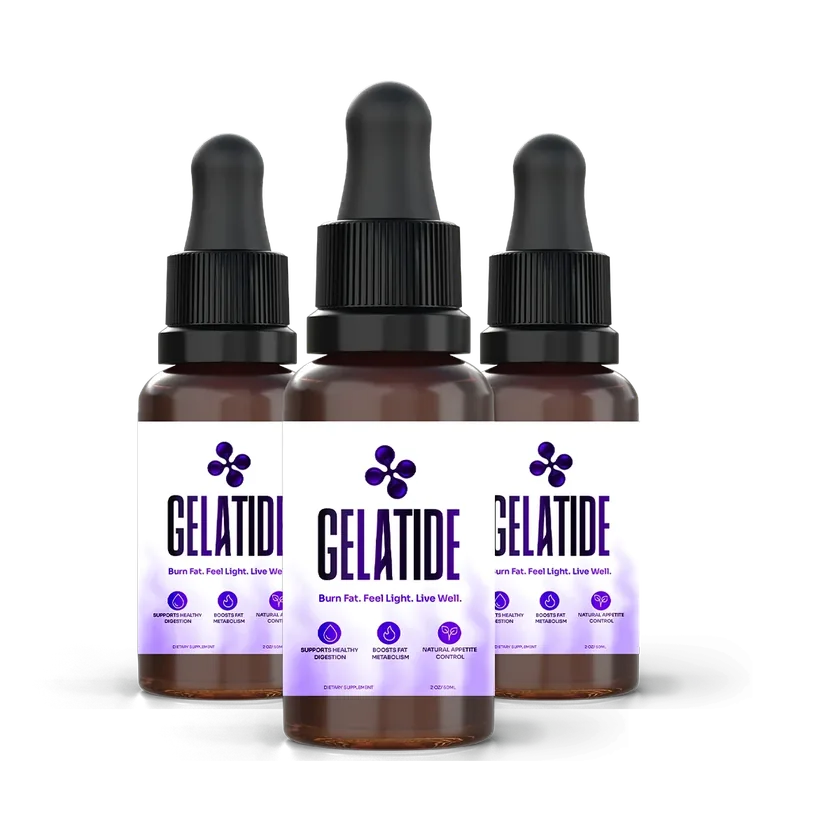
Six named extracts, and an amount column with nothing in it
This article is about a phrase. The Gelatide ingredients page is about the six extracts behind it, each with the dose the research used beside the amount this label prints, which is none.
$49 to $79 a bottle · 60-day money-back window
Order GelatideWhat the largest body of evidence in this category found
Green tea catechins have more controlled human data behind them than anything else on a metabolism label, so they are the fairest test of what this mechanism is worth in practice.
The Cochrane review of green tea for weight loss pooled fourteen randomised trials in overweight and obese adults. It found a weight difference small enough that the authors described it as not clinically important, with considerable variation between studies. That is the best-evidenced ingredient in this aisle reaching a verdict most sellers would prefer you did not read.
Widen the lens and the picture does not improve. A meta-analysis of herbal weight products across the category concluded that the effects were too small and too inconsistent to recommend any of them. That is not a statement about one ingredient having a bad day; it is a statement about the category this bottle sits in.
What the law actually permits on a label
The FDA's own questions and answers on dietary supplements set out the framework in plain language. Supplements are not approved before they go on sale. The manufacturer is responsible for the safety of the product and the truthfulness of the label. A structure/function claim must carry the disclaimer you see at the foot of this page, and it must not stray into disease territory.
The FTC's health products compliance guidance covers the advertising side and is the more useful document for a buyer. It sets out what substantiation a claim is supposed to have behind it, and reading it changes how a sales page looks permanently.
- Permitted: boosts fat metabolism, supports healthy digestion, helps maintain normal appetite.
- Not permitted: treats obesity, prevents weight gain, cures anything.
- The grey area: everything implied by a photograph, a before-and-after, a testimonial or a headline number. This is where most of the category actually operates.
Four things the phrase does not say
Written out plainly, because the gap between what the words mean and what a reader hears is the whole subject of this article.
- It does not say you will lose weight. Weight is an outcome and the phrase describes a pathway.
- It does not say how much. Even where an effect exists it is measured in tens of calories a day, which is a biscuit.
- It does not say at what dose. A claim can be made for an ingredient at any amount, including an amount far below the one any trial used.
- It does not say it was tested in this product. Almost nothing in this category has been trialled as a finished formula, including the one this website sells.
How to read any metabolism label after this
Four habits, and they take about a minute together.
- Separate the claim from the implication. Read only the words on the label, not the photograph beside them.
- Find the amount column before anything else. A claim attached to an unquantified ingredient cannot be checked against any research at all.
- Ask what outcome was measured in whatever study is being waved at you. If the answer is a blood marker or a pathway, that is what was shown.
- Notice the disclaimer. It is not legal boilerplate. It is the precise price of being allowed to print the claim above it, and it tells you exactly what standard the claim was held to.
The companion nine-point checklist turns those habits into something you can apply in a shop, and the longer guide covers where a day’s energy actually goes.
How this applies to the Gelatide bottle
Gelatide prints “Boosts Fat Metabolism” as one of three claim icons on the front label. Everything above applies to it exactly as it applies to any other bottle in the aisle, with one additional problem specific to this one.
The label names six botanical extracts and publishes no amount for any of them. So the usual next question, whether the product contains enough of the ingredient to do what the research suggests, cannot be asked at all. There is no number to compare. The ingredients page sets that out as a six-row table with one verdict in it, and the verdict is the same on every row.
None of that makes the claim improper. It is a permitted claim, correctly printed, with the required disclaimer attached. It makes the claim uncheckable, which is a different criticism and, for a buyer deciding whether to spend $158, a more practical one.
The verdict
“Boosts fat metabolism” is a legitimate, regulated phrase that means considerably less than most readers hear in it. It describes a pathway rather than a result, the best-evidenced ingredient behind it produced a weight effect the Cochrane authors called clinically unimportant, and the ingredient with the cleanest mechanism produced no weight change at all across two twelve-week trials.
That is not a reason to dismiss every product carrying the phrase. It is a reason to treat it as a description of an intention rather than a promise of an outcome, to check the amount column before anything else, and to buy only where there is a refund route you can actually use. On the claims page the same three phrases are set out with their limits attached, which is how they should always have been printed.
Sources cited in this article
- Federal Trade Commission. Health Products Compliance Guidance. December 2022. https://www.ftc.gov/business-guidance/resources/health-products-compliance-guidance
- U.S. Food and Drug Administration. Questions and Answers on Dietary Supplements. https://www.fda.gov/food/information-consumers-using-dietary-supplements/questions-and-answers-dietary-supplements
- Godard MP, Johnson BA, Richmond SR. Body composition and hormonal adaptations associated with forskolin consumption in overweight and obese men. Obes Res. 2005;13(8):1335-43. https://pubmed.ncbi.nlm.nih.gov/16129715/
- Henderson S, Magu B, Rasmussen C, et al. Effects of Coleus forskohlii supplementation on body composition and hematological profiles in mildly overweight women. J Int Soc Sports Nutr. 2005;2(2):54-62. https://pubmed.ncbi.nlm.nih.gov/18500958/
- Jurgens TM, Whelan AM, Killian L, Doucette S, Kirk S, Foy E. Green tea for weight loss and weight maintenance in overweight or obese adults. Cochrane Database Syst Rev. 2012;12:CD008650. https://pubmed.ncbi.nlm.nih.gov/23235664/
- Maunder A, Bessell E, Lauche R, Adams J, Sainsbury A, Fuller NR. Effectiveness of herbal medicines for weight loss: a systematic review and meta-analysis of randomized controlled trials. Diabetes Obes Metab. 2020;22(6):891-903. https://pubmed.ncbi.nlm.nih.gov/31984610/
Every page, every journal post, the bottle facts and the ingredients go through review by Dr. Goldwyn Foggie (Dr. Goldie), MD before they ship. We write from the printed Gelatide bottle and the seller’s own listing artwork, cite public research beside the amount that research actually used, and print “not published” wherever a figure is not disclosed rather than estimating it. This label names six botanical extracts and publishes no amount for any of them, and that fact appears in every article that names one. Corrections are made on the page itself and the review date moves forward. Write to [email protected]. Last updated September 17, 2026.