Gelatide Official Website › Blog › How to read a fat burner ingredient list
How To Read A Fat Burner Ingredient List: 7 Checks Using Gelatide
A fat burner label is easy to skim and hard to judge. These seven checks give you a method that works on any bottle, with Gelatide as the worked example.
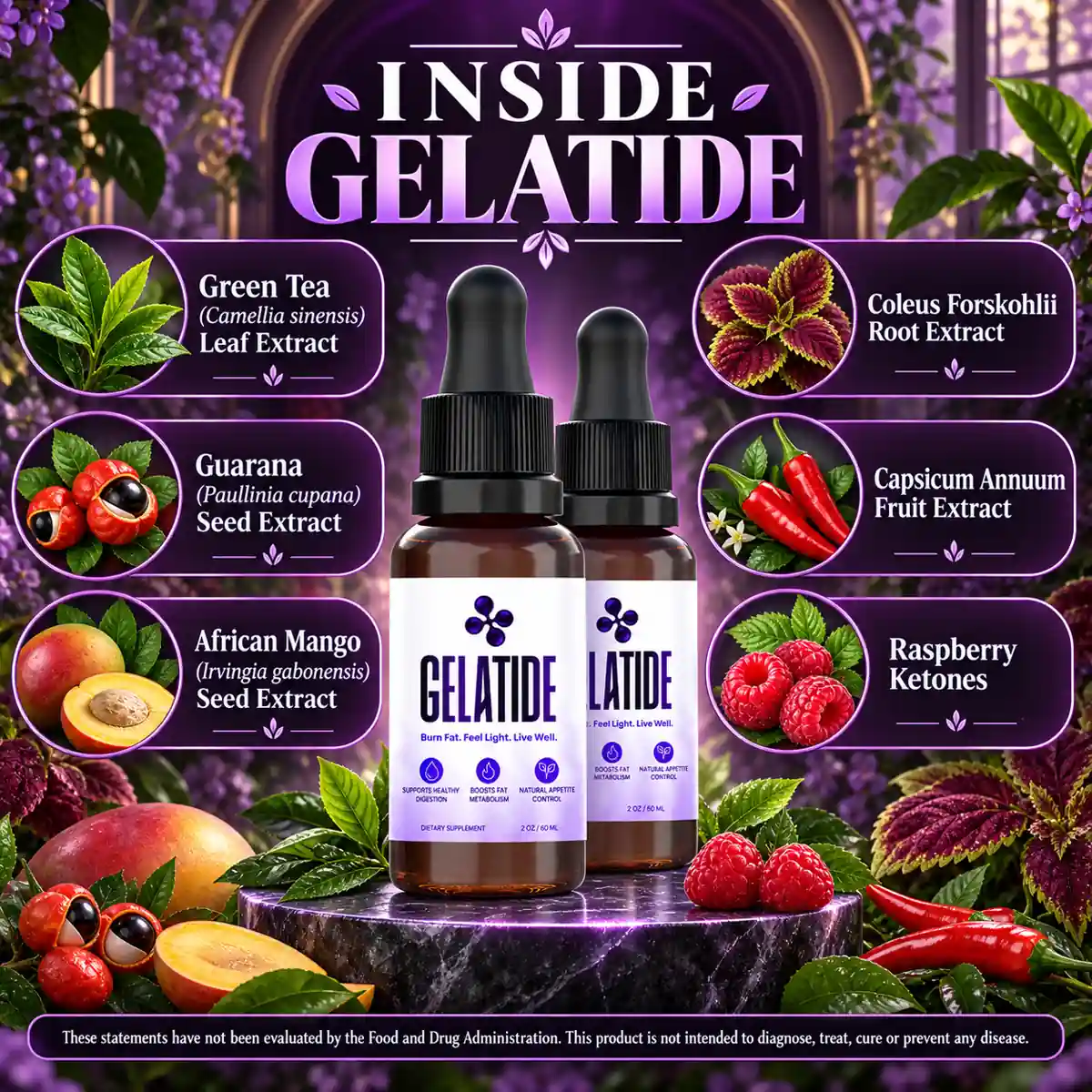
To read a fat burner ingredient list, find the amount column first, then the caffeine sources, then whether each dose matches the research. Gelatide is a useful example: six named extracts, no amount for any, caffeine from two, no other-ingredients line, and three structure and function claims rather than a weight-loss promise.
Key facts
- Find the amount column before you read the marketing.
- Gelatide names six extracts and prints no amount for any of them.
- Two Gelatide extracts, green tea leaf and guarana seed, carry caffeine, and the total is not published.
- The label carries no other-ingredients line.
- Gelatide makes three structure and function claims and no weight-loss claim.
- Reviews of herbal weight products found effects across the class too small to recommend.
General information, not medical advice. Gelatide is a dietary supplement for healthy adults aged 18 and over. It is not a drug, it is not FDA approved (no supplement is), and it is not meant to diagnose, treat, cure or prevent any disease. Ask a doctor or pharmacist about your own case, especially if you take any medicine.
Check 1: where is the amount column?
Look for it first, before the marketing, before the seals and before the reviews. A real Supplement Facts panel has a serving size and an amount for each item. If the amounts are missing, that is the most important thing you will learn about the product, and it takes four seconds to learn.
Gelatide is a clean example. The bottle carries a brand name, three claim icons, the words dietary supplement and the volume. The artwork this desk holds shows no panel, no serving size and no amount for any extract. Ten rows that a full panel would carry are all blank.
Check 2: is it a blend or a list of single amounts?
Some labels give one total for a blend of ingredients. A blend total gives you a ceiling: no single item can exceed it. A list with a separate amount for each item is better. A list with no amounts at all, as on Gelatide, gives you neither a ceiling nor a floor.
That matters because the research uses single amounts. The studies we cite gave, for example, 50 mg of forskolin a day or 300 mg of an African mango extract. You can only compare a bottle with those doses when the bottle states its own.
| Extract | Amount printed | Dose in the cited research |
|---|---|---|
| Green tea leaf | Not published | Several hundred mg of catechins a day |
| Guarana seed | Not published | Standardised to caffeine content |
| African mango seed | Not published | 300 mg of IGOB131 a day |
| Coleus forskohlii root | Not published | 50 mg of forskolin a day |
| Capsicum annuum fruit | Not published | Stated capsaicinoid doses |
| Raspberry ketones | Not published | No human efficacy dose exists |
Run the checks on the real label
The order link shows the packs and the 60-day guarantee. Compare the bottle in your hand with the checks above.
See today’s price and guaranteeGelatidedaily earns a commission when you order through this site. The price at the checkout is the price that applies.
Check 3: which items carry caffeine?
Look for tea, guarana, yerba mate, kola, cocoa and coffee bean on any fat burner list. They all can carry caffeine, often under a plant name. Gelatide has two such items. Green tea leaf and guarana seed both carry caffeine naturally, and the label prints no total.
The practical rule is simple. Add up your coffee, tea and cola on a normal day, then ask whether an unknown amount on top is acceptable. The usual ceiling quoted for healthy adults is 400 mg a day, from a large systematic review of caffeine. An unknown cannot be added to that sum.
Check 4: does each dose match the research?
A name is not a dose. Many labels list an extract that was studied, then use a different amount or a different preparation. If the amount is missing you cannot tell. For Gelatide, the scorecard says no on all six rows, and raspberry ketones have nothing to compare because no human efficacy dose exists.
The wider picture is blunt. A meta-analysis of herbal medicines for weight loss found effects across the class too small to recommend. A review of supplements built on isolated compounds found no reliable weight effect across that class. A bottle in this aisle sits inside that evidence, not outside it.
Check 5: what is not named on the label?
Our ingredients page notes what the named list does not include: no synephrine or bitter orange, no ephedra, no added stimulant beyond the caffeine in green tea and guarana, no thyroid hormone and no sugar. Ephedra has been banned in US supplements since 2004.
Be careful with that list. Every line is an inference from what is named, and an inference is weaker than a declaration. A label that prints no other-ingredients line does not tell you what carries the extracts, what preserves them or what the liquid base is.
Check 6: what do the claims say?
Read the verbs. Gelatide prints Supports Healthy Digestion, Boosts Fat Metabolism and Natural Appetite Control. These are structure and function claims about normal body processes. They are not weight-loss claims, not disease claims and not tested on the finished bottle. The FTC's health products compliance guidance explains where the line sits.
A page that quotes pounds lost, or that promises a timeline, is saying more than a label like this allows. When the claim is vague, the proof is usually vague too. Ask what was measured, in whom, at what dose and for how long.
Check 7: what protects you if it does not suit you?
Look for a guarantee and read its terms. Gelatide has 60 days from purchase, a phone claim with the order ID, buyer-paid tracked return postage, and a refund credited three to five business days after the return arrives. It is a purchase policy, not a promise of results.
Gelatide is a dietary supplement for healthy adults aged 18 and over. It is not FDA approved, and no supplement is. Ask a doctor or pharmacist before you add any fat burner, and take the label with you.
Frequently asked questions
How do I read a fat burner ingredient list?
Find the amount column first. Then look for caffeine sources, check whether each dose matches the research, note what is not named, read the claim verbs and read the guarantee.
What should a Supplement Facts panel show?
A serving size, servings per container and an amount for each ingredient, plus any other ingredients. The Gelatide artwork this desk holds shows none of those amounts.
Which Gelatide ingredients contain caffeine?
Green tea leaf extract and guarana seed extract. Both carry caffeine naturally. The total per serving is not published.
Does Gelatide list its amounts?
No. The label names six extracts and prints no amount for any of them, and no serving size appears on the artwork this desk holds.
Are fat burners effective?
Reviews of herbal weight products found effects across the class too small to recommend. Gelatide sits inside that category, and no trial of the finished bottle exists.
What is a structure and function claim?
A statement that an ingredient affects a normal structure or function of the body. It is not reviewed before it is printed. It is not a weight-loss claim or a disease claim.
Our view
The method matters more than the bottle. Find the amounts, find the caffeine, compare the dose with the research, and read the claim verbs. A label that passes those four checks has earned some trust. One that fails the first has told you a lot already.
Gelatide fails the first check in plain sight, and we say so on every page. It passes some others: it names its extracts, it is honest about claims, and it has a clear guarantee. Weigh those against the blanks for yourself.
A label you can test is a label you can trust more
The order link shows the packs and the 60-day guarantee. Check the bottle you receive against the checks in this article.
See today’s price and guaranteeGelatidedaily earns a commission when you order through this site. The price at the checkout is the price that applies.
Last updated
Sources named in this article
- U.S. Food and Drug Administration. Dietary Supplements. https://www.fda.gov/food/dietary-supplements
- U.S. Food and Drug Administration. Questions and Answers on Dietary Supplements. https://www.fda.gov/food/information-consumers-using-dietary-supplements/questions-and-answers-dietary-supplements
- National Center for Complementary and Integrative Health. Dietary and Herbal Supplements. https://www.nccih.nih.gov/health/dietary-and-herbal-supplements
- Maunder A, Bessell E, Lauche R, Adams J, Sainsbury A, Fuller NR. Effectiveness of herbal medicines for weight loss: a systematic review and meta-analysis of randomized controlled trials. Diabetes Obes Metab. 2020;22(6):891-903. https://pubmed.ncbi.nlm.nih.gov/31984610/
- Bessell E, Maunder A, Lauche R, Adams J, Sainsbury A, Fuller NR. Efficacy of dietary supplements containing isolated organic compounds for weight loss: a systematic review and meta-analysis of randomised placebo-controlled trials. Int J Obes (Lond). 2021;45(8):1631-43. https://pubmed.ncbi.nlm.nih.gov/33976376/
- Federal Trade Commission. Health Products Compliance Guidance. December 2022. https://www.ftc.gov/business-guidance/resources/health-products-compliance-guidance
- Wikoff D, Welsh BT, Henderson R, et al. Systematic review of the potential adverse effects of caffeine consumption in healthy adults, pregnant women, adolescents, and children. Food Chem Toxicol. 2017;109(Pt 1):585-648. https://pubmed.ncbi.nlm.nih.gov/28438661/
Medically reviewed by Dr. Goldwyn Foggie (Dr. Goldie), MD, Physician on October 16, 2026. We write from the printed Gelatide bottle and the seller’s own listing artwork, cite public research only where it is named in our source list, and print “not published” wherever a figure is not disclosed. Corrections go on the page and the date moves forward. Write to [email protected]. Last updated October 16, 2026.